

 Login

The Société zoologique de Granby has been working to protect wildlife for more than 70 years. Its mission, "Taking action to preserve the animal world," guides its conservation, education, awareness and animal welfare activities.
What began in the 1940s as the project of an animal lover officially took off in 1953, when the Zoo moved to a 60-acre site and the Société zoologique de Granby was founded. In 70 years, the organization has welcomed more than 30 million visitors and grown from a small menagerie into a major zoological and tourist institution.
Today, more than 25% of the animals at the Zoo belong to species with threatened status in the wild, and the organization welcomes nearly 600,000 visitors a year. The quality of its practices is recognized by several international accreditations, including those of the Association of Zoos and Aquariums and the World Association of Zoos and Aquariums.
The Granby Zoo is also a major employer in its region. At the height of its season, it has between 800 and 900 employees across several departments and lines of business. Some work year-round, others hold seasonal jobs. This creates a particularly dynamic management environment when it comes to scheduling, workforce mobility and payroll processing.
The challenge
Before Evolia, the Zoo used an integrated system that combined scheduling, time entry and payroll processing. However, administering the platform and some payroll-related processes were a poor fit for the organization's operational reality.
Schedules were prepared in Excel, then imported into the application. When a change came up afterwards, managers did not always think to update the schedule in the system right away. Gaps then appeared between the planned schedule, the hours actually worked and the data to be processed for payroll.
The main challenges were therefore to ensure a reliable transfer of hours worked to payroll and to reduce manual handling and the risk of errors, while offering more flexibility in managing schedules and more visibility into them.
The organization's structure adds a significant layer of complexity: several departments, year-round and seasonal employees, different types of schedules and considerable movement of some employees between departments. The Zoo needed a solution that could keep up with this reality while keeping payroll information reliable.
With a headcount that can reach nearly 900 employees in peak season, managing schedules and approving time took up a great deal of both managers' and the administrative team's time. Some steps required interventions that could have been avoided.
A local, tailored solution
The rollout was done in two phases, which made it possible to firmly establish time management processes before tackling payroll.
Evolia for scheduling, time and leave
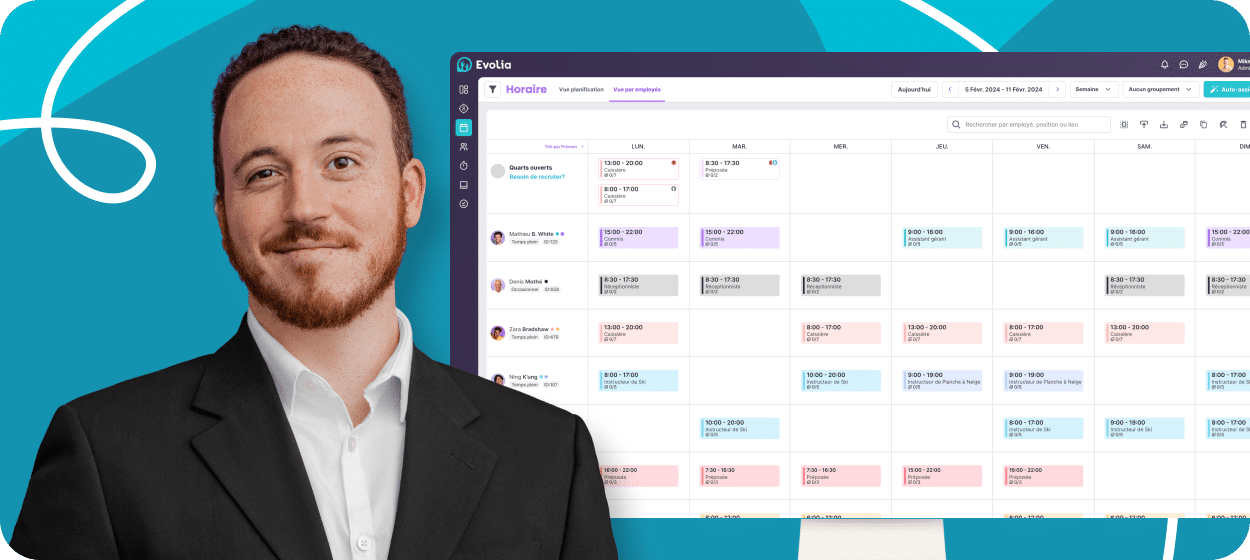
Evolia was first implemented to centralize scheduling, leave requests, punches and time approval in a single platform available to managers.
The goal was to give managers one place to manage information about their employees, and to give employees simple mobile access to their schedule, with information updated in real time whenever changes are made.
Flexibility weighed heavily in the decision. Depending on operational needs, some Zoo employees may work in different departments. Evolia makes it possible to manage this mobility and gain better visibility into how the workforce is deployed.
Employeur D for payroll processing
About a year after implementing Evolia, the Zoo began looking for a new payroll solution that could communicate effectively with the platform already in place. The goal was to reduce the time spent administering the payroll system, automate more processes and limit manual data handling.
Employeur D, Desjardins' payroll and HR platform, met these needs. It makes data entry easier during mass hiring periods and lets certain payroll changes be scheduled in advance, rather than only at processing time. That is a decisive advantage when the volume of hires and changes climbs sharply every season.
An integration that moves information both ways
"It was a crucial factor in our decision. The more data can flow automatically between the two platforms, the less we have to handle it manually, which means both time saved and a lower risk of error."
The integration between Evolia and Employeur D automatically moves several types of information between the two systems:
- hours worked, premiums, overtime and leave, transferred to payroll through an API;
- leave balances, updated in Evolia after payroll is processed;
- certain changes to employees' positions, especially useful when someone changes assignments or works in several departments.
Managers can therefore check up-to-date leave balances when reviewing a request, taking into account leave that has already been approved. Information stays consistent between operations management and payroll.

The results
The first gain is autonomy. Managers now create and adjust their schedules directly, make the necessary changes and approve their teams' time. The administrative team no longer has to step in the same way in day-to-day processes, and information is updated faster.
For employees, the mobile app lets them check their schedule in real time wherever they are, see changes quickly and submit various requests. That accessibility matters in a workplace where many people have variable and seasonal schedules.
| Process | Before | Today |
|---|---|---|
| Schedule preparation | Built in Excel, then imported into the system | Created and adjusted directly by managers in Evolia |
| Administrative time spent on schedules | Half a day to a full day per week | Self-sufficient managers, with up to half a day saved per week in some departments |
| Payroll processing | About two and a half days per pay period | Less than two days per pay period |
| Transferring hours to payroll | Manual handling and risk of discrepancies | Hours, premiums, overtime and leave transferred through an API |
| Leave balances | Checked separately | Updated in Evolia after payroll is processed |
Beyond the time saved, payroll work is spread more evenly across the pay period instead of piling up at processing time. Changes are prepared ahead of time, which reduces the work needed on the day itself.
"One of the biggest benefits is flexibility in managing our workforce. The synchronization lets us keep that flexibility while making sure that the hours, assignments and other details needed for payroll processing follow the employee."
In an organization that reaches nearly 900 employees in peak season, the benefits are not measured in hours alone. Less double entry, more autonomous managers, reliable data and the capacity to absorb a high volume of staff movements matter just as much.
A standout situation
Employee mobility between departments shows the value of the integration well. During busy periods, the Zoo needs to be able to move certain resources quickly to meet operational needs. An employee can therefore accumulate hours in different departments within the same pay period.
With Evolia, these hours are tied to the right assignments and approved directly by the managers concerned. The necessary information is then transferred to Employeur D for payroll processing.
Result: without this integration, these movements would require more follow-up and manual handling. Having the information follow the employee from one platform to the other is a major efficiency gain and helps reduce the risk of errors.

Connecting scheduling and payroll to gain autonomy
Scheduling and payroll processing feed into each other. As long as the two systems stay separate, someone has to carry the information from one to the other, check for discrepancies and fix them after the fact.
"The integration of Evolia and Employeur D lets us manage a complex operational reality with much more flexibility and autonomy, while reducing administrative handling and the risk of errors between time management and payroll."
Does your organization manage variable schedules, seasonal teams or employees who move between departments? Book a demo with a specialist to assess your situation.